
Walk-In Tub Features: What Matters Most
Walk-in tub features are easier to evaluate when you separate necessities from preferences. Start with what the bather and bathroom require, then compare comfort systems and accessories. A feature is useful only when the tub fits the person, the room and the installation plan.
This guide focuses on feature priorities. For dimensions and current model destinations, use our walk-in tub model-comparison guide. For transfer planning, see the wheelchair-transfer guide.
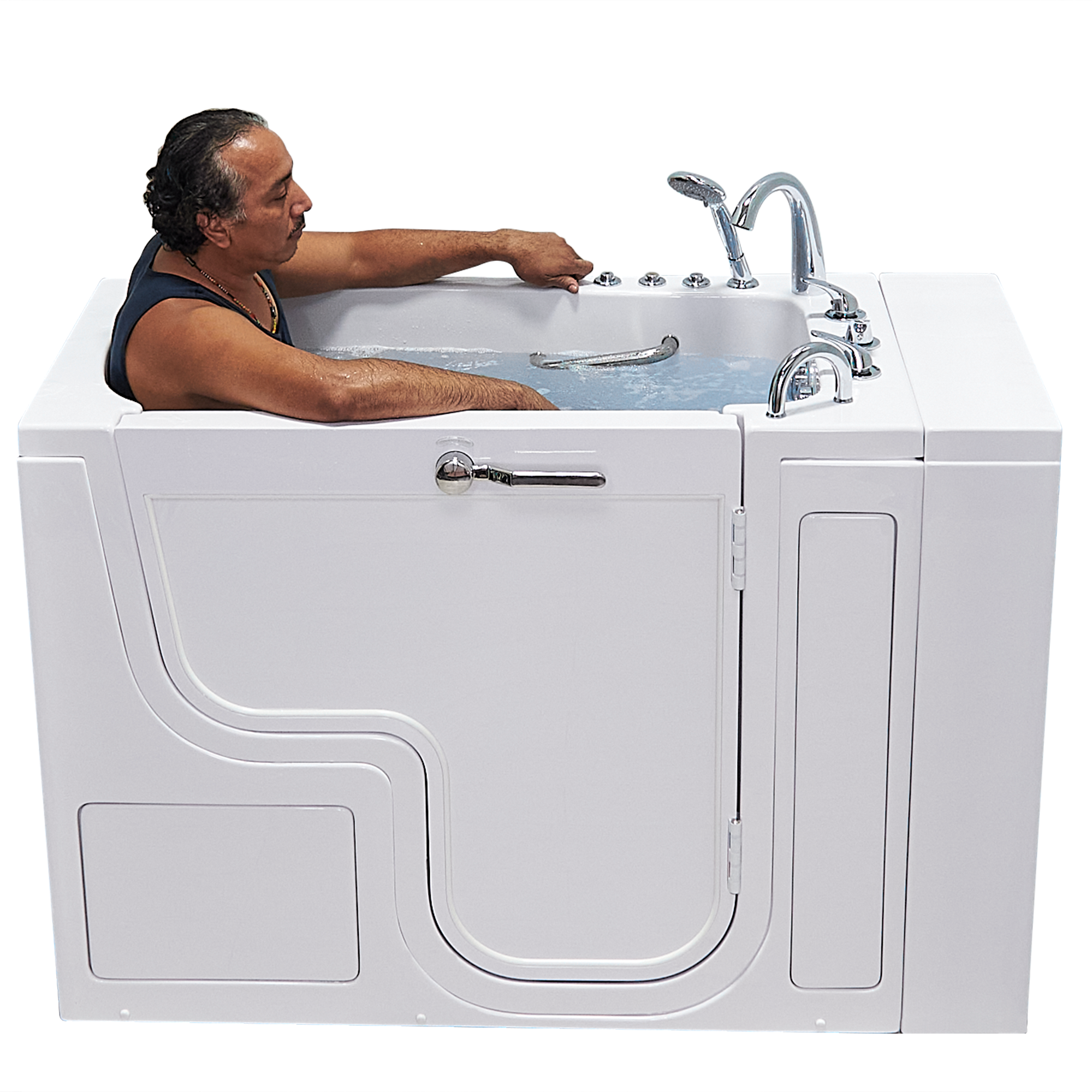
Use This Priority Order
| Priority | Questions to answer | Why it comes first |
|---|---|---|
| 1. Fit and transfer | Will the tub, seat, threshold and door work for the intended bather and room? | A feature package cannot correct a poor physical fit. |
| 2. Controls and bathing routine | Can the bather reach the latch, faucet, hand shower and feature controls from a stable position? | Controls must match the actual routine and assistance available. |
| 3. Water and installation | Can the home supply, heat and drain the expected water volume? | Fill comfort and exit timing depend on the house as well as the tub. |
| 4. Comfort features | Which heat, air, water-jet, lighting or shower options will actually be used? | These are personal preferences, not universal requirements. |
| 5. Cleaning and ownership | What maintenance, service access, warranty and documentation are required? | Ownership continues long after installation. |
1. Begin With Entry, Seat and Door Fit
Measure the bather and the bathroom before comparing feature lists. Important checks include threshold height, interior floor area, seat width and depth, seat height, door opening, grab-bar locations and the reach to the controls. The route through the home also matters: record the narrowest doorway, hallway turn and stair or elevator restriction.
Door style is a fit decision. An inward-swinging door needs clear space inside the bathing well and may suit rooms with limited exterior clearance. An outward-swinging door needs room outside the tub to open. A wide transfer door may help some seated transfers, but the seat height, approach angle, mobility device, caregiver position and bathroom clearance must be assessed together. No door style is automatically right for every bather.
Use the bathroom measurement guide before ordering. If transfer access is a priority, compare the current TubToday 30×52 WD and discuss the planned transfer with a qualified professional who understands the individual user.
2. Check Controls and Everyday Use
Sit where the bather will sit and think through the full sequence: enter, close and latch the door, start the water, adjust temperature, use the hand shower, activate any jets, drain below the door and exit. Controls should be readable and reachable without an awkward twist or long reach. If assistance is expected, confirm where the helper can stand without blocking the door.
A hand shower is useful for rinsing, washing hair and cleaning the tub. A shower package may help a shared bathroom serve people with different routines, but it also changes splash control, wall protection and plumbing scope. See the separate walk-in tub and shower-combination guide when standing shower use matters.
3. Plan for Fill, Drain and Water Temperature
A walk-in tub must normally be filled after the door is closed and drained below the door before it is opened. Ask for the exact model’s water-capacity information, faucet requirements and stated drain arrangement. Then have the home’s water heater, supply lines, drain, venting and electrical needs reviewed for the selected equipment.
Do not compare drain-time or fill-time claims without reading the conditions. Actual performance can vary with supply pressure, pipe size, drainage, installation and the amount of water used. A heated seat or backrest may improve comfort while the tub fills or drains, but it does not replace adequate hot-water planning.
The installation planning guide explains the questions to settle before a final order, and the delivery checklist covers receiving and inspection.
4. Choose Comfort Systems by Preference
Water jets
Water jets provide a more directed massage sensation. Compare jet locations, independent zones, control placement, pump access and the cleaning steps in the manual. A higher jet count is not automatically better if the jets do not align with the areas the bather wants to use.
Air massage
Air systems move air through openings in the tub and generally create a different, more dispersed sensation than water jets. Compare adjustable intensity, purge procedures, blower location and noise. Choose based on personal comfort and maintenance preferences rather than unsupported medical promises.
Heated surfaces
A heated seat or backrest can provide warmth while the tub fills, during bathing and while it drains. Confirm which surfaces are heated, whether heat levels are adjustable and what electrical circuit the exact model requires.
Lighting and accessories
Interior lighting, neck rests, extension panels, shower screens and faucet finishes can improve usability or appearance. Put them below fit, controls and installation requirements in the decision order. Confirm whether each item is included, optional or installed separately.
5. Understand Cleaning and Service Access
Ask for the cleaning instructions for the exact tub and feature package. Auto-purge, line-rinse or ozone features may support a maintenance routine, but they do not eliminate the manual cleaning steps specified by the manufacturer. Confirm access to pumps, blowers, valves and electrical components before surrounding the tub with finished walls or cabinetry.
Keep the serial number, model information, invoice, delivery inspection notes, installation records and manuals together. Review the current written warranty for the shell, door seal, pumps, controls, other parts and any labor provisions. Do not rely only on a short product-page summary.
Compare Current TubToday Door and Feature Paths
- TubToday 30×52 IS — start here when an inward-swing door fits the user and room.
- TubToday 30×52 OS — compare when outward door clearance is available.
- TubToday 30×52 WD — review for a wider transfer-style opening.
- TubToday 32×60 OS Two Seat — review when a larger two-seat layout is being considered.
These links are starting points, not substitutes for measurement. Confirm current specifications, door orientation, included equipment, delivery requirements and written warranty before purchase.
Feature-Priority Worksheet
- Write down the bather’s seated dimensions, transfer method and assistance needs.
- Record the bathroom opening, installation space and outside door clearance.
- Mark required controls and the maximum comfortable reach.
- Confirm water-heater capacity, supply, drain and electrical requirements.
- Rank water jets, air massage, heated surfaces, lighting and shower options as required, preferred or unnecessary.
- Review cleaning steps, service-panel access, delivery terms and the written warranty.
- Compare the total project scope—not just the number of features.
Frequently Asked Questions
Which walk-in tub features should I choose first?
Start with physical fit, transfer method, door clearance, seat dimensions, controls and the home’s water and installation requirements. Comfort systems come after those essentials.
Is an inward- or outward-swinging door better?
Neither is universally better. An inward door uses space inside the bathing well; an outward door needs exterior clearance. The right choice depends on the bather, transfer method and room layout.
Are air jets or water jets better?
They provide different sensations and have different equipment and maintenance needs. Compare them by personal comfort, control, cleaning and service access rather than assuming one system is medically superior.
Do ozone or auto-purge features make a tub maintenance-free?
No. Follow the exact manufacturer cleaning and care instructions. These features may support that routine but do not replace it.
Should I choose the tub with the most features?
Not necessarily. A shorter list of features that fits the user and room is more useful than extras that complicate controls, cleaning, installation or service.
Ready for the next step? Use the complete walk-in tub buying guide, compare current TubToday models, or call 630-877-4294 with your measurements and feature priorities.